



The Pokémon Card Resurgence: Why the World is Obsessed (and Stealing) Again
Welcome back to the TCGVault blog!
If you’ve stepped into a local game store or big-box retailer lately, you’ve probably noticed something wild: Pokémon cards locked securely behind heavy glass cabinets.
What started as a nostalgic playground game has morphed into a multi-million-dollar alternative asset class. The cards we used to trade in the schoolyard are now driving international crime rings, getting banned from classrooms, and setting historic auction records.
But how did we get back here? Let's dive into the history, the hype, and the undeniable cultural currency of the Pokémon Trading Card Game.
🐛 From Catching Bugs to Pocket Monsters
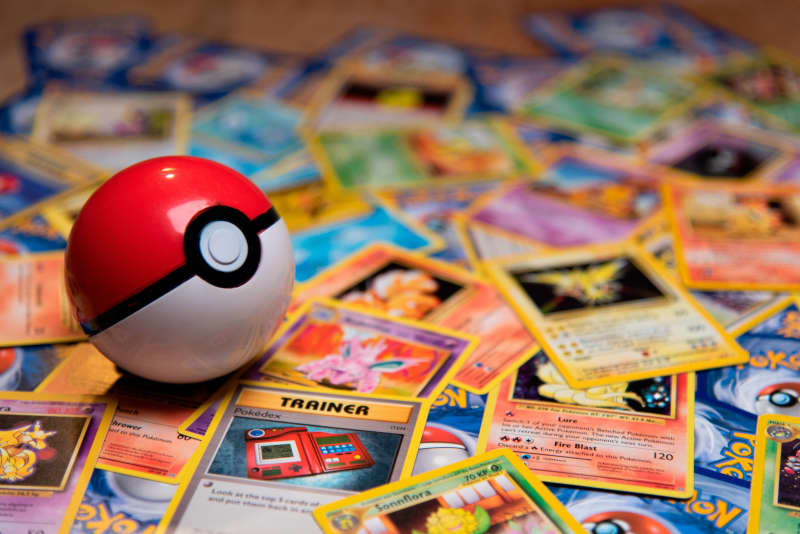
To understand the current craze, we have to look back at the origins of Japanese collectables. In the 1970s, Japanese companies like Calbee and Lotte started including collectable baseball cards and fantasy stickers in their snack packaging. These early promotions laid the groundwork for how children's collectables could become objects of intense desire and competition.
Growing up in this era, a young Satoshi Tajiri combined his love of bug-catching with the collectable craze to conceptualize Pocket Monsters.
After years of development, Pocket Monsters Red and Green launched on the Game Boy in 1996, followed shortly by the Japanese tabletop TCG. When the franchise moved overseas in 1998, it was rebranded as Pokémon, and characters were anglicized (Satoshi became Ash, Nyarth became Meowth) to connect globally. The result? A worldwide phenomenon.
📱 The Spark: Pokémon GO and TCG Pocket
No commodity stays at the top forever, and by the early 2010s, Pokémon was facing stiff competition from franchises like Yu-Gi-Oh! and Yo-Kai Watch. The franchise needed a modern revival—and it got one in 2016.
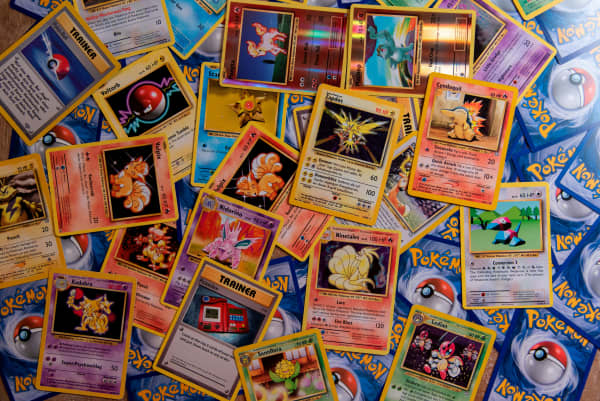
Pokémon GO changed everything. Downloaded over 500 million times, the augmented reality app re-energized the global fandom. Millions of young adults were suddenly hit with a massive wave of nostalgia, prompting them to dig through their parents' attics for their old childhood card binders.
Fast forward to today, and the digitalization of the hobby continues with apps like Pokémon TCG Pocket, making the old-school tabletop accessible to anyone with a smartphone, further fueling the fire for the physical cards.
💰 Lockdowns, Profits, and the "Holy Grail"
While nostalgia brought people back, two distinct factors turned the hobby into a gold rush:
-
The COVID-19 Lockdowns: With extra time at home and disposable income, people rediscovered their old collections and started aggressively trading and grading cards for profit.
-
Influencer Hype: The market exploded when high-profile influencers entered the space. The pinnacle of this was Logan Paul purchasing a Pikachu Illustrator card—widely considered the "holy grail" of the hobby with only 39 known copies—for a record-setting $16.4 million.
🚨 The Dark Side of the TCG Boom
With vintage booster boxes and rare graded slabs acting as easily transportable, untraceable cash, it’s no surprise that bad actors have taken notice.
The incredible potential for profit has led to a global surge in Pokémon card-related crime. We are seeing a massive wave of coordinated burglaries targeting local game shops across the US, Australia, and Japan. This economic bubble has made it tougher for the average player to access product, but it proves one thing: the demand is staggeringly high. In fact, roughly 10.2 billion cards were printed between 2024 and 2025 alone to keep up with it.
🛡️ Protecting the Vault
Pokémon cards are a rare tangible object that connects our childhood memories to the present day. They aren’t just pieces of cardboard; they are a legitimate cultural currency.
As the market continues to evolve, it's more important than ever to protect your collection. Keep your cards sleeved, get your high-value hits graded, and most importantly, keep them securely locked away.
❓ Frequently Asked Questions
Q: Why did Pokémon cards become so popular again? A: A combination of nostalgia from Pokémon GO and the 2020 lockdowns brought millions back to the hobby.
Q: What is the most expensive Pokémon card? A: The Pikachu Illustrator card currently holds the record, selling for over $16.4 million.
Q: Why are game stores locking up Pokémon cards? A: High demand and skyrocketing secondary market values have led to an increase in store thefts globally.
Q: Should I get my rare Pokémon cards graded? A: Yes, grading authenticates and preserves the condition of high-value cards, often increasing their worth.
Q: Where can I safely buy authentic Pokémon cards? A: Always buy from trusted retailers and dedicated hobby stores like TCGVault.
Q: What is Pokémon TCG Pocket? A: It's a new mobile app released to help digitalize and streamline the card collecting experience.
Q: How do I keep my collection safe? A: Use penny sleeves, hard toploaders, and store your rarest cards securely in a personal vault.
Q: Are modern Pokémon sets worth collecting? A: Absolutely. While vintage cards hold classic value, modern sets still feature highly sought-after, rare alternate arts.
Q: Is the physical card game still played? A: Yes! While collecting is a massive draw, local and international TCG tournaments remain highly active.
Q: How many new Pokémon cards are being printed? A: To meet massive global demand, The Pokémon Company printed roughly 10.2 billion cards between 2024 and 2025 alone.